How to Watch the FIFA World Cup 2026™ Online Safely
Reading time: 21 min
Last Updated: Jun 8, 2026


The FIFA World Cup 2026™ is a once-in-a-generation event — 48 teams, 3 host countries, and more matches than any tournament in history. But with so much attention on the games, risks follow: use of public Wi-Fi networks, shady streams, and opportunistic hackers all tend to spike around major sporting events.
The safest way to watch is with a reliable VPN. It encrypts your connection, hides your IP address, and reduces the risk of tracking, data leaks, and phishing attempts while you stream. I’ve tested dozens of VPNs, and the difference in protection, especially on shared networks, is noticeable right away.
Of all the VPNs I tested, ExpressVPN is my top pick for staying safe online during the FIFA World Cup 2026™. It’s an official tournament supporter, and its military-grade encryption keeps your data protected on any network. It’s fast enough that you won’t notice any slowdown and backed by a 30*-day money-back guarantee for new users, so you can try it completely risk-free. Editor’s Note: Transparency is one of our core values at WizCase, so you should know we are in the same ownership group as ExpressVPN. That said, our detailed reviews follow a strict methodology that examines all relevant performance factors to help you arrive at your own informed conclusion.
Quick Guide: 3 Easy Steps to Watch the FIFA World Cup 2026™ Safely
- Get a reliable VPN. Download and install a trusted VPN on your device. ExpressVPN is an official tournament supporter and my top pick for the FIFA World Cup 2026™ — it’s fast, easy to set up, and keeps your connection protected on any network.
- Connect to a server. Open the VPN app and connect to a server in your location. Once connected, your internet traffic is encrypted and your data is shielded from third parties.
- Watch safely. Head to your homebroadcaster’s website or app and enjoy the matches knowing your connection is secure, whether you’re at home, in a stadium, or on the road.
How a VPN Protects You While Watching the World Cup
A VPN won’t make every risk disappear but it addresses the most common and serious ones in a way that requires almost no effort on your part. Once it’s running, it works quietly in the background while you focus on the match. Here’s what it actually does for you.
Encrypts your connection
The most important thing a VPN does is encrypt your internet traffic. Every piece of data that leaves your device (login details, payment information, browsing activity) gets scrambled into an unreadable format before it travels across the network. Even if someone intercepts it, they can’t make sense of it.
This is particularly valuable on public Wi-Fi, where your traffic is otherwise visible to anyone on the same network. With a VPN running, a man-in-the-middle attack becomes effectively useless. The attacker can intercept your data, but there’s nothing there they can read or use.
Hides your IP address
When you connect to the internet, your IP address acts like a digital home address. It identifies your device and, by extension, your approximate location. Advertisers, trackers, and data brokers use this to build profiles of your behavior online.
A VPN replaces your real IP address with one belonging to the VPN server, making it significantly harder for third parties to track your activity back to you. During a high-traffic event like the FIFA World Cup 2026™, this is a straightforward way to reduce your exposure without changing anything about how you watch.
Secures untrusted networks
If you’re watching from a hotel, a bar, a fan zone, or anywhere you didn’t set up the Wi-Fi yourself, you’re on an untrusted network. You have no way of knowing how it’s configured, who else is on it, or whether it’s even legitimate. Some attackers set up fake Wi-Fi hotspots in busy public areas specifically to intercept traffic from unsuspecting users.
A VPN creates a secure, encrypted tunnel between your device and the internet regardless of the network you’re on. It doesn’t matter whether the Wi-Fi is poorly secured or outright malicious, your data stays protected either way.
The Best VPNs For Watching the FIFA World Cup 2026™ Safely
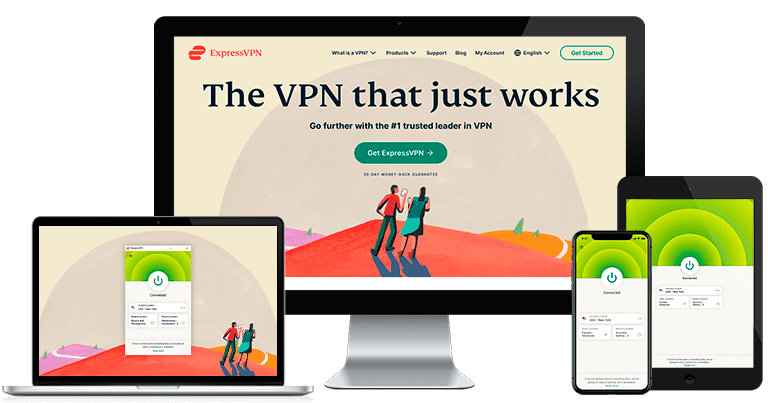
1. ExpressVPN — Best overall VPN for watching the FIFA World Cup 2026™ safely

Key Features:
- AES-256 encryption and an independently audited no-logs policy
- Lightway protocol for strong security without speed loss
- Kill switch prevents data leaks if the VPN connection drops
- 3,000 servers in 105 countries
- Up to 14 simultaneous device connections
- 24/7 live chat support and a 30*-day money-back guarantee for new users
ExpressVPN is the most well-rounded option on this list for staying secure while watching the FIFA World Cup 2026™. It’s an official tournament supporter, its security credentials are among the strongest available, and its apps are clean and straightforward enough for anyone to use, regardless of technical experience.
It protects your connection with:
- AES-256 encryption — scrambles all data leaving your device into an unreadable format, so even if someone intercepts your traffic on a public network, there’s nothing there they can use.
- Audited no-logs policy — ExpressVPN’s claim that it doesn’t store records of your activity has been independently verified by third-party security auditors, not just stated in a privacy policy.
- Lightway protocol — ExpressVPN’s own VPN protocol, designed to maintain strong encryption without the speed penalty that heavier protocols can introduce. This matters during live video, where a slow connection quickly becomes a frustrating one.
- Kill switch — if your VPN connection drops unexpectedly on an untrusted network, the kill switch immediately cuts your internet access to prevent your unencrypted data from leaking. It’s a small feature with a significant impact on real-world security.
ExpressVPN supports up to 14 simultaneous connections (depending on tier), so a single subscription covers your phone, laptop, tablet, and more. The one downside worth noting is price. It’s the most expensive option on this list. That said, every plan comes with a 30*-day money-back guarantee for new users, so you can try it risk-free before committing.
Editor’s Note: Transparency is one of our core values at WizCase, so you should know we are in the same ownership group as ExpressVPN. That said, our detailed reviews follow a strict methodology that examines all relevant performance factors to help you arrive at your own informed conclusion.
ExpressVPN works on: Windows, Mac, Linux, Android, iOS, Chrome, Firefox, PlayStation, Xbox, Apple TV, Amazon Fire Stick, Amazon Fire TV, smart TVs, routers, and more.
2026 Update! You can subscribe to ExpressVPN for as low as per month with a 2-year + 4 months purchase (save up to %)!! This is a limited offer so grab it now before it's gone. See more information on this offer here.
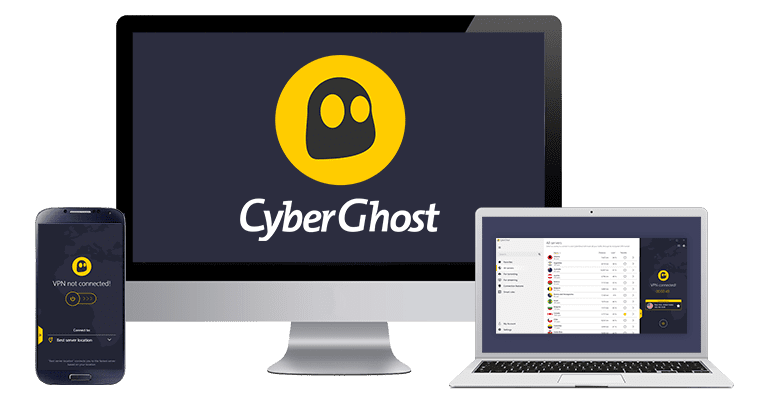
2. CyberGhost — Easiest VPN to stay protected on unfamiliar networks

Key Features:
- Automatic Wi-Fi protection activates the VPN on unfamiliar networks
- AES-256 encryption and a verified no-logs policy
- Kill switch blocks internet access if the VPN connection drops
- 11,690 servers across 100 countries
- Up to 7 simultaneous device connections
- 24/7 live chat support and a 45-day money-back guarantee for multi-month plans
CyberGhost is the pick if you want solid protection without having to think about it. Its interface is one of the most beginner-friendly of any VPN on the market, and several of its features are designed to work automatically so you’re protected even if you forget to manually turn the VPN on.
Those features include:
- Automatic Wi-Fi protection — CyberGhost detects when you connect to an unfamiliar network and activates the VPN for you. This is particularly valuable during the FIFA World Cup 2026™, when you’re likely jumping between different public networks in bars, hotels, and fan zones.
- AES-256 encryption — the same standard used by governments and financial institutions to protect sensitive data, applied to all traffic leaving your device.
- Verified no-logs policy — CyberGhost does not store records of your browsing activity, meaning there’s nothing to hand over even in the event of a legal request.
- Kill switch — cuts your internet connection immediately if the VPN drops, ensuring your data never travels unencrypted on an untrusted network.
With 11,690 servers across 100 countries, there’s almost always a nearby server available for travelers, which helps maintain reasonable speeds while keeping your connection fully encrypted. CyberGhost also offers the longest money-back guarantee on this list at 45 days for multi-month plans, giving you plenty of time to test it before committing.
Editor’s Note: Transparency is one of our core values at WizCase, so you should know we are in the same ownership group as CyberGhost VPN. That said, our detailed reviews follow a strict methodology that examines all relevant performance factors to help you arrive at your own informed conclusion.
CyberGhost works on: Windows, Mac, Linux, Android, iOS, Chrome, Firefox, PlayStation, Xbox, Apple TV, Amazon Fire Stick, Amazon Fire TV, routers, and more.
2026 Update! You can subscribe to CyberGhost for as low as per month with a 2-year purchase (save up to %)! This is a limited offer so grab it now before it's gone. See more information on this offer here.
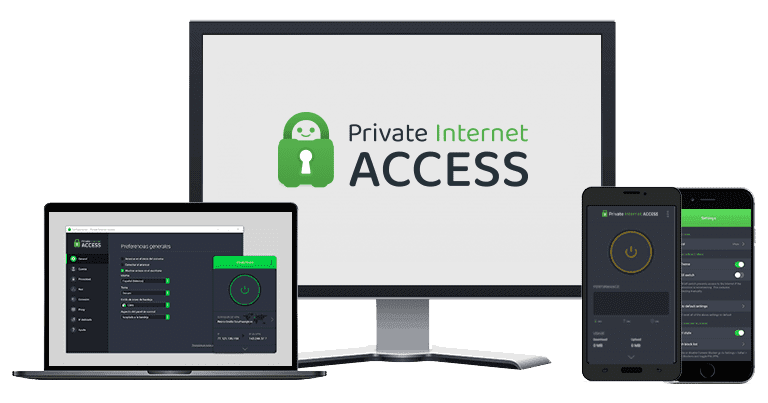
3. Private Internet Access (PIA) — Best for users who want full control over their security
Key Features:
- Customizable encryption: AES-128 or AES-256, depending on your needs
- Configurable kill switch and manual protocol selection
- MACE feature blocks ads and malware at the network level
- 29,650 servers across 50 countries, including all 50 US states
- Unlimited simultaneous device connections
- 24/7 live chat support and a 30-day money-back guarantee for new users
PIA is the most customizable VPN on this list and a strong choice for users who want to go beyond default settings and fine-tune their own security configuration. Most casual viewers won’t need to touch any of these settings, but the option is there for those who want it.
The standout features include:
- Customizable encryption — PIA lets you choose between AES-128 and AES-256 encryption, as well as switch between protocols manually. AES-256 is the stronger option and the one we’d recommend for public network use during the FIFA World Cup 2026™.
- Configurable kill switch — beyond simply enabling or disabling it, PIA lets you adjust how the kill switch behaves, giving more advanced users greater control over exactly what happens if the VPN connection drops.
- MACE — PIA’s built-in feature that blocks ads, trackers, and malware at the network level. This adds an extra layer of protection against the kind of malicious popups and fraudulent links that circulate heavily during major sporting events.
PIA supports unlimited simultaneous connections, making it a practical choice for households with a lot of devices to cover. All plans come with a 30-day money-back guarantee for new users.
Editor’s Note: Transparency is one of our core values at WizCase, so you should know we are in the same ownership group as Private Internet Access. That said, our detailed reviews follow a strict methodology that examines all relevant performance factors to help you arrive at your own informed conclusion.
PIA works on: Windows, Mac, Linux, Android, iOS, Chrome, Firefox, PlayStation, Xbox, Amazon Fire Stick, Amazon Fire TV, routers, and more.
2026 Update! /month for a two-year plan with 2 months free (%)!! This is a limited offer so grab it now before it's gone. See more information on this offer here.
Why These VPNs Work for the FIFA World Cup 2026™
Not all VPNs are built the same, and with so many options on the market it can be hard to know what actually separates a trustworthy option from a poor one. The VPNs listed above stand out because they consistently deliver on the features that matter most. Here’s what they all have in common:
- Strong encryption standards — All VPNs on this list offer AES-256 encryption and modern protocol support (such as WireGuard, Lightway or equivalent) which ensures your data and activity remains safe.
- A verified no-logs policy — A VPN that logs your activity defeats its own purpose. The providers on this list have no-logs policies that have been independently audited by a reputable third-party security firm, not just self-declared in a privacy policy. An audit means someone has actually checked that the claims hold up in practice.
- Reliable apps across your devices — A VPN is only useful if it runs smoothly on the devices you actually watch on. The providers on this list have dedicated apps for your phone, laptop, tablet, and other devices. They also offer simultaneous connections which means you can use them on several devices at once.
- Ease of use — Not everyone watching the FIFA World Cup 2026™ is a tech enthusiast, and you shouldn’t need to be. The best VPNs for casual viewers are ones you can install, connect, and largely forget about. The VPNs listed above have a clean interface, an easy server selection process, and an auto-connect feature that activates protection the moment you join an unfamiliar network.
Why Safe Streaming Matters During the FIFA World Cup 2026™
The FIFA World Cup 2026™ is one of the most-watched events on the planet. And wherever millions of people gather online at the same time, whether physically in stadiums or virtually across devices, cybercriminals follow. This tournament is no exception. Security researchers have already flagged a sharp rise in malicious activity1 targeting fans ahead of the event, from fraudulent ticketing sites to phishing campaigns designed to look like official FIFA World Cup 2026™ content.
The risks aren’t limited to tech-savvy attackers pulling off sophisticated hacks. Many of the most common threats require nothing more than a fan connecting to the wrong network or clicking the wrong link. Here’s what to watch out for.
Public Wi-Fi risks
Watching the FIFA World Cup 2026™ from a bar, a café, an airport lounge, or a hotel room means one thing almost guaranteed: public Wi-Fi. And public Wi-Fi is, by design, open. That openness is convenient but it also means that anyone else on the same network can potentially see your traffic.
This is known as a “man-in-the-middle” attack. Without encryption protecting your connection, a bad actor on the same network can intercept the data passing between your device and the internet. That includes login credentials, saved payment information, and any personal data tied to the apps and accounts you use while connected.
Think about a realistic FIFA World Cup 2026™ scenario: you’re at a café watching the quarterfinals, connected to the venue’s Wi-Fi. You log into your email to check something, or tap through to your banking app during halftime. On an unsecured network, those actions can expose sensitive information without you ever knowing it happened.
Fake streaming sites & phishing
Major sporting events reliably produce a wave of fraudulent websites and phishing attempts, and the FIFA World Cup 2026™ is already seeing this play out. Cybersecurity firm SILIKN has detected more than 5,000 suspicious domains impersonating official FIFA World Cup 2026™ platforms, replicating the look and language of legitimate ticketing portals, live-stream pages, and merchandise stores to trick fans into handing over their financial and personal data.
The tactics are straightforward but effective. A fan searches for a free stream or a last-minute ticket, lands on a site that looks convincing, and enters their card details or account credentials. In other cases, phishing emails or messages impersonate broadcasters, sponsors, or even the tournament itself, containing links that install malware or redirect users to credential-harvesting pages.
How to Stay Safe While Watching the FIFA World Cup 2026™ Online: A Step-by-Step Guide
Setting up a VPN for the first time can feel daunting if you’ve never done it before. In practice, it takes less than ten minutes and you only have to do it once. Here’s the full process, from choosing a VPN to making sure it’s actually working before the first match kicks off.
Step 1: Choose a VPN
The most important decision is picking a VPN you can actually trust. Not all VPNs offer the same level of protection. Some have weak encryption, questionable logging practices, or unreliable apps that drop connections at the worst possible moment.
For most people watching the FIFA World Cup 2026™, the key things to look for are AES-256 encryption, an independently audited no-logs policy, a kill switch, and a clean, easy-to-use app. If you’re not sure where to start, I recommend ExpressVPN since it’s an official tournament supporter, and it offers a Lightway protocol which has lightning-fast speeds (for zero lags) and simultaneously keeps your data protected.
Step 2: Download and install the app
Once you’ve chosen a VPN, head to the provider’s official website to download it. Avoid downloading VPN apps from third-party sites. Always go directly to the source to make sure you’re getting the legitimate, up-to-date version.
On desktop (Windows or Mac):
- Go to the VPN provider’s official website and navigate to their downloads page.
- Select the version for your operating system and download the installer.
- Open the installer file and follow the on-screen instructions. This typically takes under two minutes.
- Once installed, open the app and log in with the account you created at sign-up.
On mobile (iOS or Android):
- Open the App Store (iOS) or Google Play Store (Android).
- Search for your VPN provider by name. Make sure you’re downloading the official app by checking the developer name.
- Tap Install and wait for the download to complete.
- Open the app and log in with your account credentials.
If you’re planning to watch on multiple devices (a phone and a laptop, for example) repeat this process on each one. All three VPNs on our list support multiple simultaneous connections, so a single subscription covers you across devices.
Step 3: Connect to a server
With the app installed and open, connecting is straightforward. Most VPN apps have a single large connect button that automatically selects the best available server for your location. For most users, this is the easiest option and works perfectly well.
One thing to keep in mind: connect to the VPN before you join a public network, not after. If you join an unsecured network first and then activate the VPN, there’s a brief window where your device is exposed. Getting into the habit of turning the VPN on first eliminates that risk entirely.
Step 4: Verify your connection is secure
This step is optional but worth doing at least once, especially if you’re new to VPNs. It gives you confidence that the VPN is actually working as it should before you rely on it in a public setting.
Check your IP address:
- With your VPN connected, go to a site like ipleak.net or whatismyipaddress.com
- The IP address shown should belong to the VPN server, not your real one.
- If you see your actual IP address, the VPN isn’t connected properly. Disconnect, reconnect, and try again.
Run a DNS leak test:
- On the same site (ipleak.net runs this automatically), check that the DNS servers shown match your VPN provider, not your ISP.
- A DNS leak means your browsing requests are still being routed through your internet provider even with the VPN on. A good VPN should prevent this entirely.
Test the kill switch:
This one is optional but useful to know about. Manually disconnect your VPN while browsing and see whether your internet cuts out immediately.
If it does, the kill switch is working correctly. Your data won’t leak if the VPN drops unexpectedly.
If your browsing continues uninterrupted after disconnecting the VPN, check your app settings to make sure the kill switch is enabled.
Step 5: Enable auto-connect
The most common way people end up unprotected on public networks isn’t a technical failure, it’s simply forgetting to turn the VPN on. Auto-connect solves this by activating the VPN automatically whenever you join a network the app doesn’t recognise as trusted.
Once the auto-connect is set up, you don’t need to think about it again. Your connection will be protected automatically every time you sit down to watch a match, whether you’re at home, in a hotel, or at a bar showing the game on the big screen.
Additional Safety Tips While Watching Online
A VPN covers a lot of ground, but it works best as part of a broader set of habits. These are simple, practical steps anyone can take to stay safer while watching the FIFA World Cup 2026™ online.
Avoid suspicious links and popups
If a link promises a free stream, an exclusive deal, or urgent news about the tournament, treat it with skepticism before you click. As covered earlier, fraudulent FIFA World Cup 2026™ sites are already circulating in large numbers, and many of them are designed to look convincing at first glance. Stick to sources you recognise, and if you’re unsure about a link, go directly to the official website rather than clicking through.
The same applies to popups. Legitimate streaming platforms and broadcasters don’t use aggressive popup ads asking for personal information or pushing software downloads. If you see one, close it and move on.
Stick to official platforms
The safest way to watch the FIFA World Cup 2026™ online is through officially licensed broadcasters and platforms. Unofficial streams not only carry a higher risk of malware and phishing, they’re also far less reliable, and you’re more likely to end up missing the match than saving money. If you’re not sure which platforms have the official rights in your country, a quick search before the tournament starts is worth the two minutes it takes.
Keep your apps and devices updated
Software updates almost always include security patches that fix vulnerabilities cybercriminals actively look to exploit. Before the tournament kicks off, make sure your operating system, browser, streaming apps, and VPN are all running their latest versions. This is one of the simplest and most effective things you can do to reduce your exposure online.
Use strong, unique passwords
If you’re logging into streaming platforms, sports apps, or any other accounts during the FIFA World Cup 2026™, make sure those accounts are protected with strong, unique passwords. Reusing the same password across multiple services is one of the most common ways accounts get compromised. If one service suffers a data breach, every other account sharing that password becomes vulnerable. A password manager makes this easy to manage without having to memorise anything.
Stay Safe While Watching the FIFA World Cup 2026™
The FIFA World Cup 2026™ is an amazing event, and the last thing you want is for a security lapse to overshadow it. The good news is that staying safe online doesn’t require much effort. A reliable VPN, a few sensible habits, and a couple of minutes of setup before the tournament starts is genuinely all it takes.
Of the three VPNs on this list, ExpressVPN is our top pick for most people. It’s fast, straightforward to set up, and offers consistently strong protection across all devices. And it comes with a money-back guarantee for new users, so there’s no risk in trying one out before the first match kicks off on June 11.
Editor’s Note: Transparency is one of our core values at WizCase, so you should know we are in the same ownership group as ExpressVPN. That said, our detailed reviews follow a strict methodology that examines all relevant performance factors to help you arrive at your own informed conclusion.
FAQs
Is it safe to watch the FIFA World Cup 2026™ online?
Do I need a VPN to watch safely?
Are free VPNs safe for streaming major events?
Can I use a VPN on mobile while watching matches?
*Please note that the ExpressVPN’s 30-day money back guarantee is not available at the moment.





Leave a Comment
Cancel